
Answer Engine Optimization: Writing for the Questions People Actually Ask
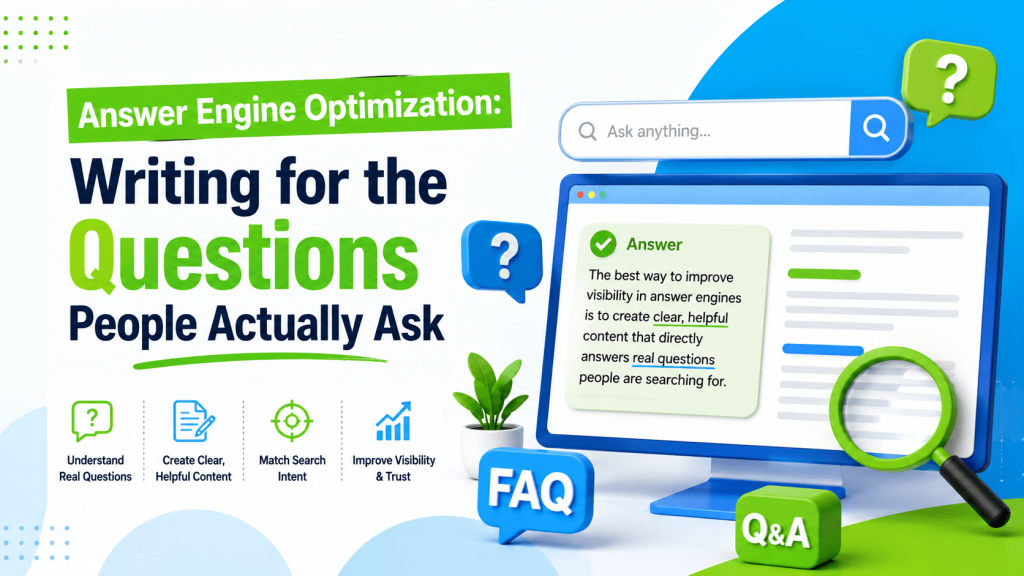
Search is quietly turning into a question-and-answer conversation. People ask real questions and expect a direct response, whether from a search summary, an AI assistant, or a voice tool. Answer engine optimization is simply the practice of making your business the clear, trustworthy answer to those questions. It’s less technical than it sounds.
Start With the Questions, Not the Keywords
Old-school optimization chased keywords. Answer engines reward businesses that address the full question behind a search. Instead of targeting ‘roof repair,’ think about what a homeowner actually asks: ‘how much does it cost to fix a leaking roof?’ Answering the real question in plain language is what gets you surfaced.
Behind every search is a person with a worry or a goal. The keyword is just the surface; the question underneath it is what they truly want handled. When your content speaks to that underlying concern directly, you’re far more useful to both the reader and the tool trying to help them.
Be Clear, Specific, and Honest
Answer tools favor content that’s easy to understand and confident without being vague. Give straightforward answers, use plain words, and be specific about what you offer and where. Wishy-washy content gets skipped in favor of sources that state things clearly. Honesty and clarity are your biggest advantages here. A small business willing to answer plainly often outshines a larger competitor hiding behind vague marketing language.
Consistency Builds the Trust
For a tool to hand your business to someone as the answer, it needs to trust your information. Consistent details across your site, your profile, and directories like Spot Pro give these systems the confidence to feature you. Scattered, conflicting information makes them hesitate and choose someone else.
Trust and clarity work together here. Clear answers show you’re helpful; consistent details show you’re reliable. A business that has both becomes an easy pick for an answer engine, because featuring you carries little risk of steering the person wrong. That’s exactly the safe bet these tools are looking for.
Conclusion
Answer engine optimization comes down to a simple shift: stop thinking in keywords and start thinking in questions. Figure out what your customers really ask, answer it plainly and honestly, and keep your details consistent everywhere. Do that and you become the easy answer whenever someone asks about what you do. As search keeps shifting toward questions and answers, that simple habit keeps you in the conversation.
Frequently Asked Questions
How is answer engine optimization different from regular SEO?
Traditional SEO focused heavily on keywords and rankings, while answer engine optimization focuses on directly answering the questions people ask. The two overlap, but the mindset differs: instead of trying to rank a page, you aim to be the clear, trustworthy source a tool quotes when someone asks a question.
What kind of questions should I answer online?
The ones your customers ask most, like pricing ranges, availability, service areas, and what makes you different. Pay attention to the questions you hear on calls and in person. If people ask it often, answering it plainly online helps you show up when others search for the same thing.
Do I need long articles for this to work?
Not necessarily. Clear, direct answers matter more than length. Sometimes a concise paragraph that fully answers a common question works better than a long piece that buries the point. Focus on being genuinely helpful and easy to understand rather than hitting a word count.
How does consistency help me get chosen as the answer?
Answer tools prefer sources they can trust, and trust comes from consistent, accurate information across the web. When your details match everywhere and your answers are clear, these systems feel confident featuring you. Conflicting or vague information makes them less likely to pick your business as the response.