
Topical Authority: Becoming the Local Name People Recommend
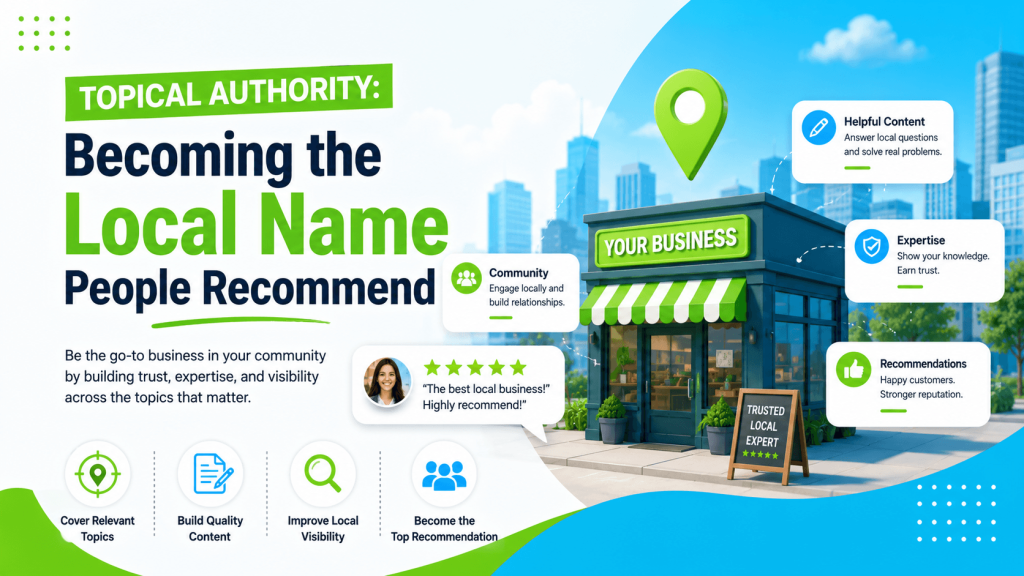
In every town there’s a business that’s become the go-to name for something. The bakery everyone recommends for wedding cakes. The shop people trust for bike repairs. That reputation isn’t luck; it’s topical authority, and any focused business can build it. Here’s how a local operation becomes the obvious answer in its niche.
Depth Beats Breadth
Trying to be everything to everyone dilutes your reputation. The businesses people recommend tend to be known for doing one thing exceptionally well. When you go deep on a specialty, you become memorable and easy to refer. ‘Talk to the folks who only do X’ is a powerful recommendation.
There’s a reason people drive across town for the shop that only does one thing. Specialists inspire confidence. When your whole reputation rests on a single craft, customers assume, usually correctly, that you’ve seen every version of their problem before and know exactly how to handle it.
Show Your Knowledge Openly
Authority grows when you share what you know. Answering common questions, offering honest advice, and demonstrating real experience all signal expertise to both customers and search tools. You don’t need to give away every trade secret; just show that you clearly know your craft and care about getting it right.
Generosity with knowledge tends to pay off. When you help someone understand their problem, even for free, you become the name they think of when they’re ready to hire. People trust the expert who taught them something over the stranger who just wants the sale. Give freely, and the goodwill quietly circles back as referrals and repeat work down the line.
Reinforce It Where People Look
A strong reputation needs to be visible to spread. Consistent, detailed listings that clearly state your specialty, including on directories like Spot Pro, help the right customers connect the dots and recognize you as the local expert. Repeated, consistent signals about what you do best strengthen that authority over time. The more clearly and consistently you signal your specialty, the faster people start associating your name with it.
Conclusion
Becoming the name people recommend isn’t about being the biggest; it’s about being clearly the best at something specific. Go deep on your specialty, share what you know, and make that expertise visible wherever people look. Over time, that focus turns you into the local authority customers seek out by name. And a business people ask for by name rarely has to compete on price the way an unknown one does.
Frequently Asked Questions
What does topical authority mean for a small business?
It means becoming the recognized go-to for a specific service or product in your area. Rather than being vaguely known for many things, you're clearly known for doing one thing exceptionally well. That focused reputation makes you easier to remember, recommend, and find when people need exactly what you offer.
Can a small business really compete on expertise?
Absolutely, and often better than large competitors. Bigger companies spread themselves thin, while a focused small business can go deep and truly own a specialty. Customers frequently prefer the recognized expert in a niche over a generalist, which levels the playing field for smaller operations willing to specialize.
How do I show expertise without giving away my secrets?
Share helpful advice and answer common questions without handing over your entire playbook. Explaining how to spot a problem or what to consider before hiring demonstrates knowledge while still leaving room for your paid work. Being genuinely helpful builds trust; you don't have to reveal everything to prove you know your craft.
Does specializing mean turning away business?
Sometimes, and that's usually fine. Focusing on what you do best often brings in more of the right customers than trying to serve everyone. A clear specialty makes you memorable and referable. You can still handle related work, but leading with a focus tends to strengthen your reputation rather than limit it.